
Bible Believers' Newsletter 1374
"We focus on the present Truth – what Jesus is doing now. . ."
ISSN 1442–8660
Christian greetings in the precious Name of our Lord Jesus Christ; we are blessed to have your company in fellowship around God's unchanging Word. Your brother–in–Christ
Please welcome our guest author Ret. Admiral Cem Gürdeniz who describes the First Year Balance Sheet of the Second Trump Era as "Annus Horribilis".
In Newsletter 1054, "One Year," we referred to Joel 2:16, 23, "Gather the people, sanctify the congregation, assemble the elders, gather the children and nursing infants: let the Bridegroom go forth of His chamber, and the Bride out of her closet . . . Rejoice, you children of Zion, rejoice in the Lord your God (for all things will be restored for your sakes Acts 3:13-26); for He has given you the former (Heb.) 'Moreh' or teaching rain unto righteousness (which Israel rejected two thousand years ago when they crucified their near kinsman Redeemer): He will cause to come down for you the rain, the former (teaching) rain (for Christ's end-time Bride), and the latter (Heb.) 'yowreh,' sprinkling or harvest rain in the first month" (typed by Matthew 27:50-53). There is a teaching rain and a harvest rain. Our teaching rain has restored the apostolic faith by revealing the mystery of the Seven Thunders of Revelation 10 which are the revelations contained in the unwritten Seventh Seal (Joel 2:23; Malachi 4:5, 6b; Matthew 17:11; Revelation 8:1; 10:1-11). Our harvest rain will endue the saints to manifest the Sons of God and change in the atoms, then anoint Israel's two Prophets as a former or teaching rain, to "bring the Law to remembrance," expound the mysteries of their Seven Trumpet Judgments and Seven Vials, and introduce 144,000 elect Israelites of Jacob's children, (not Jews), to the second or (Gk.) 'parousia' Coming of the Son of man (Malachi 4:4; Zechariah 4; Daniel 9:24; Revelation 11:3-13).
"The Spoken Word is the original seed" (Luke 8:11). The ground was sown and watered by Brother Branham's Message which is why one seldom finds ground that has not been sown (and rejected). Remember, my Brothers and Sisters, God is only fishing for the rainbow trout; all other fish are thrown back into the stream. Brother Branham's Message was the "former" or teaching rain of the Spirit that quickened the seed planted in the hearts of Christ's end-time Bride. Just before our ripening a fresh outpouring called the "latter" or harvest rain will anoint the multiplied seed with the mighty power God wrought in Jesus Christ so we can manifest that we are the Sons of God (Romans 8:19; Ephesians 1:3-23).
In 1965 Brother Branham said, "We are hoping soon as possible to make a way where we can bring all of us together, maybe under a big tent, where I'm feeling real definitely led to preach on the seven last Vials in the Bible" (65-0725M, The Anointed Ones at the End Time, par. 7-15). We will not be brought together under canvas but under cover of His Word "in one mind in the unity of the faith" as on the Day of Pentecost (Acts 2:1; Ephesians 1:10-23; 4:13-16).
The Prophet was expecting to declare, "It is done!" (Revelation 16:17; 15:8; the sanctuary is cleansed (Exodus 34:3; 40:34-35; Leviticus 16:17; 2510; I Kings 8:10-11; II Chronicles 7:1; Matthew 24:21, 29-31; Luke 1:10; Revelation 6:12; 8:3-5; 11:19), now "proclaim the Day of vengeance of our God" (Isaiah 29; 1, 6; 61:2b; 63:4; Malachi 4:5; Revelation 15:1; 16:17; 11:19), because after each dispensation a Vial poured a plague upon the non-elect church as a "temporary" or "investigation Judgment" to distinguish the "foolish virgins" from the false church. And all seven plagues must be fulfilled before resurrection can take place.
The plague of the Seventh Vial is the final judgment of God's wrath poured into the air (Joel 1:3-2; Zechariah 13:8-14:9; Matthew 24:27-35; Revelation 6:12-17; 16:17-21). It causes an earthquake of unprecedented magnitude since man was on earth, destroying cities, dividing Jerusalem into three parts as per UN Resolution 181, November 29, 1947. Mountains will be leveled, 100-pound hailstones will fall upon people who curse God.
Newsletter nl1053 explained how Christ's end-time Bride would ripen to maturity under the S_O_N-Light of the Message over one year prior to the end of the dispensation. "As soon as He gets His Church in speaking conditions, gets His Church to a place that He can flow Himself through, and love, and persuade, and fellowship, for the 'third pull' in the manifestation of the Sons of God; then there'll come an Eden. He'll take His Church back to where it left Him at back to an Eden again (59-1217, What the Holy Ghost was Given For? par. 30-32). Full teaching: "One Year."
This Newsletter serves those of like precious faith. Whoever will receive the truth is welcome to feed their soul from the waters of the River of Life, proving all things at the mouth of two or three witnesses in his own Bible. Free expression is being suppressed in the Western, once Christian world where the value of money is depreciating and the money power prefers precious metals while stocks, bonds and real estate devalue while interest is based on once higher valuations. G. Edward Griffin wrote: "It is widely believed that panics, boom-and-bust cycles, and depressions are caused by unbridled competition between banks; thus the need for government regulation. The truth is just the opposite. These disruptions in the free market result from government prevention of competition by granting monopolistic power to the central bank."
The money power will see Bitcoin and private digital currencies fail against Central Bank Digital Currencies that reward obeisance conduct or award a drill and Saturday detention at week's end as a sharp adjustment in the financial relationship facilitating the viability of the US dollar when its economy is recognized as bankrupt. Only then will US, European and Australian governments effectively condemn the Zionist genocide in Gaza, which they have always facilitated, and impose strong coercive measures against the Israeli economy. European support for the Nazi regime in Ukraine and aggression against Russia will cease, and all political relations with the rebel Chinese province (Taiwan) would bring peace.
Throughout post World War II the European political class, almost without exception, submitted to the leadership of the US ruling elites thinking they were fulfilling the role of allies when, in truth, they were serving as vassals. The destruction of the Nord Stream 2 gas pipeline making it impossible to supply Russian gas to Europe exemplified this reality. Now, the Yankee empire has made sure that Europe depends on liquefied gas supplies from the US and its allies. The US elites need Europe to turn into a heavily militarized vassal region and everything indicates that the European ruling elites will comply. Increasingly extreme domestic measures of political repression, cuts to social welfare, health care and education and greater labor exploitation are already being applied. It remains to be seen if or when the peoples of Europe will finally rebel to demand sovereign policies meeting the aspirations and needs of their families (globalresearch.ca. The bank is always saved, but the people are ruined).
Anthony Grigor–Scott
Mass Evacuation! Collapsing Fast—Town Falling into 4 Mile Long Abyss! Sicily under Emrgency!
January 27, 2026 — 239,935 views #Etna #Sicily #Volcano. I have NEVER seen anything like this! Niscemi under EVACUATION and CUT OFF. Situation is DRAMATIC according to Officials, the Niscemi Landslide is moving fast ! Sicily under Emergency!
The Images we get from Sicily are heartbreaking! But also Sardinia and more islands in the Mediterranean are devastated ! Italy in Emergency. Waves like a gigantic Tsunami hit the coast of Sicily, Mount Etna volcano's home. Cyclone Harry is responsible for the storm surge and destruction. Full story: youtube.com
Comment: 10 m. (30ft.) Tsunami. Revelation 16:20 "And every island fled away, and the mountains were not found".
Americans Paying for Trump's Tariffs
January 23, 2026 — American consumers and importers are shouldering nearly all the costs of the tariffs imposed by the White House, according to a study by the Kiel Institute for the World Economy, contradicting President Donald Trump's claims about their impact. While hurting American consumers, the tariffs are also wreaking havoc on Europe, which is subordinated to the United States in every way, even at the expense of its own interests, but receives neither respect nor reciprocity from the Trump administration, only increasing contempt and exploitation.
The study, published by the Kiel Institute for the World Economy, a research center based in Germany, indicates that the US tariffs effectively functioned as a tax on domestic consumption, with the effects falling mainly on US importers and consumers. After analyzing nearly $4 trillion in trade shipments between January 2024 and November 2025, researchers found that foreign exporters absorbed only about 4% of the impact of the tariff increase, while the remaining 96% was borne by businesses and consumers in the US . . .
The current situation reflects a mix of US unilateral actions and European vulnerabilities, creating a global climate of uncertainty in which rising tariffs often heighten tensions and threaten international economic stability. For this reason, Brussels even discussed the anti-coercion instrument – the so-called "trade bazooka." This law gives the EU the power to strike back against economic blackmail from a non-EU country and overrides existing trade agreements. In practice, this could limit US companies from public procurement and impose retaliatory tariffs on €93 billion worth of American goods. Full story: globalresearch.ca
Greenland, Trump and Artificial Intelligence
January 23, 2026 — The claim that the United States wants Greenland for national security doesn't fully explain what's been happening behind the scenes . . . Greenland offers something no other place on Earth does at scale—cold temperatures ideal for AI data centres, enormous unused territory and rare earth resources, essential for building the hardware that runs modern technology.
For years, technology billionaires have talked about moving beyond democratic systems. Peter Thiel has been the most open about it, arguing that governments run by people are inefficient and technology should be allowed to govern instead. He has repeatedly supported the idea of "freedom cities" built from the ground, operating outside traditional political systems, run by private rules, private courts and private infrastructure . . . money from Jeff Bezos, Sam Altman and Bill Gates was already flowing into AI infrastructure concepts that depend on scale, isolation and physical control. These investments were never labelled as Greenland projects, but the requirements were identical—huge computing capacity, minimal regulation and long-term access to raw materials and distance from public oversight.
A project of this size cannot move forward without political cover and requires someone who understands Silicon Valley power structures and government negotiation. That person appeared when Ken Howery was sworn in as ambassador to Greenland late last year. Howery isn't a career diplomat, but one of the original PayPal Mafia figures, directly connected to Elon Musk and other Jews . . . Full story: globalresearch.ca
Trump Sets up His Own United Nations, 'A New Mafia Club': a Dangerous Echo of the 1930s
January 23, 2026 — With the establishment of his own "Peace Council", Donald Trump is smashing the international legal order to pieces. This dangerous shadow-UN conjures up images of the 1930s, when the disappearance of global rules led to a world conflagration. A crisis between the US and the other NATO countries over Greenland has—for the time being—been averted. But in the shadow of that, Trump is busy with something far more far-reaching, steering international diplomacy toward a dangerous tipping point. It concerns the Board of Peace (Peace Council) that Trump has brought into being in Washington.
In November 2025, the UN Security Council had formally agreed, via Resolution 2803, to such a council as a temporary administration for the reconstruction of Gaza. But this initiative goes much further. The council, which is chaired by Trump himself, is presented in recent official documents as a global mechanism for conflict management. Leaked documents show that the council has all the trappings of a shadow UN. A few days ago, Trump said that the Peace Council "could" replace the UN. So what officially began as a body for the reconstruction of Gaza, with UN approval, is now developing into a direct attack on the United Nations . . . Netanyahu too, the architect of the genocide in Gaza, is becoming a member of the council . . . The result is a hybrid power body of billionaires, intelligence services, and technocrats who jointly decide on the future of conflict areas, over the heads of the local population and detached from international law. You could also describe it as a mafia-UN. As if it were an IPO, Trump wants to have the founding charter of the council signed in Davos . . . Full story: globalresearch.ca
Comment: The League of Nation and the United Nations Organization were Jewish criminal organizations; now it appears that Zionist Donald has both trumped with a new Mafia club.
Can Trump Demilitarize Gaza with Night Raids and Death Squads?
January 23, 2026 — At the opening ceremony for Donald Trump's so-called Board of Peace in Davos, Jared Kushner unveiled glossy images of his vision for a "new Gaza": shining apartment towers, luxury developments, and sweeping views of the Mediterranean. There were no Palestinians at the ceremony—and none on the Board of Peace itself. In Kushner's fantasy, Palestinians appear only as an absence, buried beneath the rubble of the real Gaza. But how, exactly, are Palestinians to be "demilitarized" and pacified to make way for this Riviera of the Middle East? The assassination of Gaza's Khan Younis police chief in a drive-by shooting this January offers a chilling clue. It was not an isolated act of lawlessness, but an ominous signal of what lies ahead. As Israeli-backed Palestinian militias openly take credit for targeted killings, the United States is reviving a familiar, deadly—and thoroughly discredited—playbook from Iraq and Afghanistan, in which death squads, night raids, and "kill or capture" missions are cynically repackaged as stabilization and peace.
Gaza is now being positioned as the next laboratory for this model, under the banner of Donald Trump's so-called "peace plan," with consequences that history has already shown to be catastrophic. That strategy was laid bare on January 12th, 2026, when Lieutenant-Colonel Mahmoud al-Astal, the police chief of Khan Younis in Gaza, was assassinated by a death squad based in the Israeli-occupied part of Gaza beyond the "yellow line." A militia leader known as Abu Safin immediately took credit for the killing, which he said was ordered by Shin Beit, Israel's anti-Palestinian spy agency . . .
Like Bush and Blair planning the invasion of Iraq in 2003, Trump is planning to systematically violate the UN Charter, the Geneva Conventions, and especially the 1949 Fourth Geneva Convention, which guarantees protection for civilians in war zones or under military occupation.
Tony Blair's role in Trump's plan is further evidence that the plan has nothing to do with peace and everything to do with the Western imperialism that keeps rearing its ugly head around the world, and which has bedeviled Palestine for more than a century.
Appointing Blair to any role in governing Gaza ignores not only his role in US and British aggression against Iraq, but also his lead role in the U.K. and EU's decision, in 2003, to abandon earlier efforts to bring Palestinian factions together in the interest of Palestinian unity . . . Full story: globalresearch.ca
The Palestinian Genocide
January 23, 2026 — Article II of the Convention on the Prevention and Punishment of the Crime of Genocide defines genocide in these terms: In the present Convention, genocide means any of the following acts committed with intent to destroy, in whole or in part, a national, ethnical, racial or religious group, as such: Killing members of the group;
Causing serious bodily or mental harm to members of the group; deliberately inflicting on the group conditions of life calculated to bring about its physical destruction in whole or in part; imposing measures intended to prevent births within the group; forcibly transferring children of the group to another group. And now, a UN Independent Commission of Inquiry has established that Western-supported Zionists are indeed committing genocide against Palestinians by satisfying not just one but four of the criterion in what is now appropriately named the Palestinian Genocide.
Former UN Relief and Works Agency for Palestine refugees in the near east (UNRWA) chief spokesperson Chris Gunness details the findings of the Report in the video below . . . Full story: globalresearch.ca
Australian Charities Bankrolling Israeli Warcrimes?

January 23, 2026 — Are you subsidizing Israel and the IDF? Australian charities are meant to relieve suffering, not cause it. A growing list of Australian registered charities has been identified by Michael West Media which funnels money to entities in Israel linked to the IDF and illegal West Bank settlements. They enjoy tax concessions in Australia, including in some cases Public Benevolent Institution status. We look at how the media covers the Israel lobby, the power of the lobby over mainstream media, and the rushed introduction of the Hate Speech laws . . . Full story: youtube.com Comment: The West Report
Why the Jews are NOT God's Chosen People
2024 — This video is an informative study of biblical history regarding the Hebrews, children of Abraham, Joshua, Israelites, Gentiles and descendants of Cain is not as thorough as one would hope; nonetheless it is a wonderful visual representation of how lineages and peoples came about. Full story: youtube.com.
Israel is Controlling Trump and Nobody is Noticing
December 25, 2025 — President Trump moved the US embassy to Jerusalem, recognized the Golan Heights, and withdrew from the Iran deal—giving Israel everything it asked for. But why? In this video, I follow the money, family connections, and administration appointments to show you exactly what's driving Trump's Israel-first policies . . .
Full story: youtube.com
The Epstein Connection EVERYONE Keeps Missing
January 14, 2026 — Jeffrey Epstein didn't just have powerful friends—he had connections to intelligence agencies that protected him for decades. In this video, I break down who Epstein really was, how he got his start, the evidence suggesting he was working for foreign intelligence, and what we're learning from the newly released files that dropped in December 2025 . . . Full story: youtube.com
The Palestinian Genocide
January 23, 2026 — Article II of the Convention on the Prevention and Punishment of the Crime of Genocide defines genocide in these terms: In the present Convention, genocide means any of the following acts committed with intent to destroy, in whole or in part, a national, ethnical, racial or religious group, as such: Killing members of the group;
Causing serious bodily or mental harm to members of the group; deliberately inflicting on the group conditions of life calculated to bring about its physical destruction in whole or in part; imposing measures intended to prevent births within the group; forcibly transferring children of the group to another group. And now, a UN Independent Commission of Inquiry has established that Western-supported Zionists are indeed committing genocide against Palestinians by satisfying not just one but four of the criterion in what is now appropriately named the Palestinian Genocide.
Former UN Relief and Works Agency for Palestine refugees in the near east (UNRWA) chief spokesperson Chris Gunness details the findings of the Report in the video below . . . Full story: globalresearch.ca
This is What I Think Happened to Epstein: Whitney Webb
January 24, 2026 — This discussion exposes a darker continuity beneath today's headlines, linking the Epstein scandal, elite impunity, and the accelerating push toward a fully digitized and surveilled economy. What begins as a critique of Noam Chomsky's dismissive response to his meetings with Jeffrey Epstein expands into a broader indictment of how power actually operates: sweetheart plea deals justified by "intelligence ties," media omissions that erase crucial context, and a ruling class that closes ranks while claiming ignorance. The Miami Herald revelations, Alex Acosta's admission, and Epstein's extraordinary access to political, academic, and military elites all point to a system where legality bends to intelligence interests, and where accountability is selectively applied.
From there, the conversation widens to the present moment, where financial digitization, the erosion of cash, and the end of online anonymity converge with AI-driven surveillance. The argument is stark: as governments push citizens into an all-digital economy, they are simultaneously constructing the tools to monitor, predict, and preempt behavior itself. Financial transactions, online speech, and personal data become raw material for algorithmic governance, edging society toward a "pre-crime" paradigm that no longer requires wrongdoing, only statistical suspicion. Against the backdrop of mounting debt, systemic insolvency, and looming (Central Bank Digital Currencies) CBDCs, this new system appears less like reform than a controlled transition designed to preserve elite power while ordinary people absorb the costs.
The discussion closes by connecting these structural forces to culture and technology, particularly their impact on children and young people. From Hollywood's long-rumored abuses to unchecked exposure through smart phones, gaming platforms, and algorithmic media, the result is a generation shaped by forces their parents barely understand. Taken together, these threads suggest not isolated scandals, but a coherent pattern: concentrated power, shielded from scrutiny, engineering both economic systems and cultural environments to maintain control in a period of deepening crisis. Turn on notifications to stay updated! . . . Full story: youtube.com
'Annus Horribilis': First Year Balance Sheet of the Second Trump Era
By Ret. Admiral Cem Gürdeniz
When we look at the practice at the end of the last year, the picture that emerges reveals a gap between Trump's theory and practice. When Donald Trump marched to power for the second time, he made a clear promise to the nationalist MAGA base. America would turn inward, revive production, get rid of globalist neocon and Zionist understanding that has put the country in a regime of uninterrupted wars for the last four decades, and thus establish a more balanced power relationship with China. In short, Trump initially decided to part ways with the neocon and Zionist globalist finance–capital world, which challenged the order established by the USA after 1945, especially after the Cold War.
Theory – Practice = Divergence
When we look at the practice at the end of the last year, the picture that emerges reveals a gap between Trump's theory and practice. Today, Trump has come to a position that is diametrically opposed to his promises. The Trump administration sought to establish an almost unlimited hegemony over North, Central, and South America, which it defined as the Western Hemisphere, and aimed to completely liquidate the influence of Russia and China in this geography. States that deviated from the US line were openly threatened with the use of force; Mexico, Colombia, Nicaragua, Venezuela, Cuba, and even Canada became targets of this repressive approach. The outbursts claiming that Greenland should join the USA, either "of its own accord" or by other means, have been among the most extreme examples of this line.
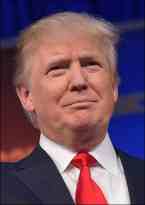 All these steps show that the discourse of turning inward and seeking balance that Trump advocated during the election period has been effectively abandoned. On the other hand, the past year has witnessed a rare scale of force usage in American history. Trade wars were waged with a harshness far beyond expectations; sanctions and embargoes have ceased to be classical foreign–policy tools and have been transformed into direct weapons. In this process, the US state acted as an instrument of the finance–capital order that controls a global financial volume of approximately 720 trillion dollars, rather than its own national interests. At the same time, the influence of the Zionist structure in the United States—Jewish bankers, media owners, and associated universities and think tanks—on foreign policy and security decisions has become even more visible.
In other words, the first year of the Trump era, in these respects, was recorded as the balance sheet of a harsh, inconsistent, and increasingly aggressive hegemonic practice shaped under the pressures of the global financial order, rather than the promised claim of "making America great again."
Unlimited Use of Force and the Israelization of the USA
The most obvious break in Trump's first year was that the use of force abroad was no longer an exception and instead turned into a routine state practice. This practice reflected the doctrine that Israel has applied since 1948. In this context, US support for the Gaza genocide, attacks on Iran, turning a blind eye to Israel's attack on the Hamas delegation while talks in Qatar were ongoing, the blockade and quarantine imposed on Venezuela, the sinking of Venezuelan civilian boats without warning, the seizure of tankers belonging to the shadow fleet on the high seas, the kidnapping of Maduro, and finally the open threats against Greenland—NATO territory—clearly revealed the gap between Trump's own promises and his actions.
This picture points to an understanding of the use of force that gains continuity, grows in scale, and expands in geography, rather than being limited to single and isolated raids. The increase in airstrikes is not merely a quantitative leap, but a structural change showing that the military threshold has been deliberately lowered. The use of force is now being decided through shorter decision–making processes, on broader grounds, and across wider areas. While Biden ordered 555 airstrikes during his four–year term, Military Times, based on ACLED (Armed Conflict Location & Event Data Project) data, recorded that Trump ordered 626 airstrikes in a single year.
In short, the US no longer adequately considers legal review and justification while lowering the threshold for conflict. The easy use of naked force, as practiced by Israel, encourages opposing sides to slide into the logic of "easy" retaliation. As in the case of Venezuela, the blurring of legal boundaries under flexible and ambiguous labels such as the "fight against drugs" creates a practical space that erodes international humanitarian law, even when it provides a short–term military advantage. This dynamic shows that not only the USA, but the entire global system has entered a more fragile, more unpredictable, and more conflict–prone phase. In the background of all these developments lie two basic facts. The first is the US debt burden, which has reached unbearable levels and has clogged the debt–to–debt mechanism. The second is the gradual depreciation of the dollar that sustains this structure, its share in global reserves falling to 40 percent, and financial fragility becoming increasingly visible through various documents and disclosures.
The Case of Venezuela
One of the sharpest breaking points of the last year occurred in Venezuela. Developments surrounding the kidnapping of President Maduro intensified the perception that Washington is pushing the limits of the direct use of force against a sovereign state, ostensibly on the grounds of "drugs" or "order," but in reality driven by control over natural resources. A broad segment of the international community viewed this intervention as clearly unlawful and described it as a violation of the principle of state sovereignty.
The equality of sovereign states and the prohibition of interference in domestic affairs—among the fundamental principles of international law—are protected by Article 2(4) of the UN Charter. The overthrow or capture of the leader of another state by military force is clearly contrary to this principle, since the legitimate use of force is not possible without a mandate from the United Nations Security Council. The critical point here is not a single country. Ultimately, the issue concerns the impact of the Venezuelan case on international norms and the principle of sovereignty.
In a system where one actor normalizes shaping domestic political outcomes through military pressure, other states may turn to similar non–normative methods. This weakens sovereignty and increases the risk that global law will be replaced by raw power politics. If great powers justify determining the political future of rivals or victims through military action, other actors will inevitably follow similar paths. This process raises the risk that the principle of sovereignty and the prohibition of the use of force between states in the international system will become negotiable. In this respect, the USA has inflicted the greatest damage on the international order. The normalization of such practices will allow power politics to take precedence over law.
While the Economy Becomes a "Weapon"
Trump's first year also witnessed the systematic use of economic tools alongside military instruments as mechanisms of pressure and intimidation. The "America First" trade document, published at the beginning of Trump's second term, openly declared that trade policy would be used as a tool of "national security" and "strategic pressure." The transition of this document from theory to practice became evident over the past year through tariff increases imposed on almost every state perceived as a threat to American interests.
These sanctions evolved into measures that targeted not only bilateral relations with the USA, but also the relations of those states with third countries. As a result, the principle of sovereign equality was eroded, and international law gave way to naked power relations determining who may trade with whom. For example, on January 10, 2026, Trump announced that he would impose a 25 percent tariff on third countries trading with Iran.
As a systemic consequence, the norms of the World Trade Organization and the predictable trade order are increasingly being replaced by the "threat of the day" or the "bargain of the day." When viewed together with the pressure applied over Greenland, this approach ties security guarantees and trade blackmail into the same package for allies. On January 17, Trump decided that tariffs initially set at 10 percent and scheduled to take effect on February 1 would be increased to 25 percent as of June 1 if European states created obstacles regarding Greenland. This mafia–style challenge will inevitably accelerate the turn of other countries toward alternative payment systems and regional trade blocs, further driving de–dollarization. Today, while the dollar's share in global bank reserves has fallen to 40 percent, gold has exceeded the 35 percent threshold.
Pressure on Rules and Institutions
It was not only foreign policy that generated controversy during Trump's first year; the pace and scope of executive action at home also placed the "checks and balances" mechanisms—central to the American political architecture—under constant strain. Executive orders reaching 225 in 2025 pointed to an unprecedented intensity for a first presidential year and reinforced the perception that decision–making had shifted toward a path that bypasses congressional and judicial oversight.
Although this speed was justified by the rhetoric of "effectiveness," it deepened concerns over institutional legitimacy and predictability. The shift from merit–and career–based appointments toward loyalty–based staffing within the federal bureaucracy became increasingly visible, triggering a profound debate over the professional quality of public administration. For example, it became normalized to appoint billionaires who were former real–estate agents—and even individuals frequently mentioned in the Epstein files—instead of career diplomats to key foreign–policy roles and ambassadorial posts, including in the case of Türkiye. While rapid staffing centralized state capacity in the short term, it eroded institutional memory in the medium and long term. This process further exposed already fragile social fault lines. Political language hardened, the space for compromise narrowed, and the country was pulled into an accelerating axis of polarization. Meanwhile, as seen in the State of Minnesota, the executive's ICE practices against immigrants created deep fractures not only in security and law, but also within the social contract itself. The methods and scope of these practices fostered local distrust and entrenched hostile psychology between opposing camps. As the gap between the abstract guarantees of law and concrete practices on the ground widened, faith in the impartiality of the state was damaged.
This erosion contributed to a dramatic decline in Trump's credibility ratings. In this context, the harsh centralization of executive power on one hand, the rhetoric of "withdrawal" on the other, and foreign interventions that challenge international law, alliances, and friendships together normalized the contradictions experienced in Trump's final year. This represents an unusual rupture in traditional American politics. For decades, US politics functioned on a shared institutional ground despite ideological differences. That ground has eroded Trump's last year. Congress, the bureaucracy, alliance networks, and even the "limits of law" have increasingly been transformed into instrumental tools.
Retreat from Soft Power
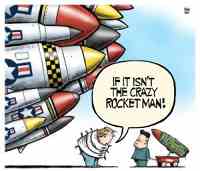 The global influence of the USA in the post–1945 period was not based solely on its military and economic capacity; it also stemmed from its ability to set norms, build order, and be perceived as a reliable mediator when necessary. This power functioned through legitimacy, narrative, and institutional continuity long before the tank or the aircraft. Washington was hegemonic to the extent that it could present its own interests as universal principles. This architecture collapsed during Trump's second term. The USA began to lose these three pillars simultaneously.
At the point reached today, the USA's capacity to produce legitimacy has been seriously eroded. Its narrative power has weakened, and the claim of "setting an example" has been replaced by naked power politics. The withdrawal of the Trump administration at the beginning of 2026 from more than 60 UN bodies—especially UNCTAD (United Nations Conference on Trade and Development)—and other UN–affiliated institutions and organizations represents a turning point showing that this rupture is structural rather than symbolic. This step amounts to a declaration that the USA has effectively withdrawn from the soft–power front and settled on the hard–power front. Washington is no longer the actor that writes the rules; instead, it appears as one that reminds others of its power before sitting at the table.
It is no coincidence that throughout this one–year period the Trump line consistently described soft–power institutions as "unnecessary costs," "inefficient spending," and "shackles that bind the USA." Cultural diplomacy, public diplomacy, and multilateral platforms were viewed as dysfunctional in short–term interest calculations. As seen in the case of the Voice of America (VOA), the dismantling of the global narrative channels that the United States has built over decades was put on the agenda, and although these moves clashed with Congress and the judiciary, the intention was made clear. What is observed here is that the USA has abandoned the will to explain itself to the world.
The tendency to move away from multilateralism has not been limited to the UN, but has also deepened with signs that ties with platforms such as UNCTAD, where the global economic order is discussed, will be severed. This picture shows that the discourse of a "rules–based international order" has been de facto abandoned and replaced by an order based on bilateral bargaining, threat–reward balances, and asymmetric power relations. Rules have been replaced by bargaining, norms by power, and institutions by instant interest calculations.
The strategic outcome of this decline in soft power is clear. Military and economic pressure instruments are becoming more naked, more fragile, and more reactive. Hard power stripped of legitimacy generates resistance rather than deterrence. As the use of force increases, the ground that renders it acceptable becomes thinner. The US sphere of influence does not expand; on the contrary, it contracts. The problem facing Washington today is not merely a lack of power, but the loss of meaning and acceptability of power itself. This shows that US hegemony has entered a qualitative dissolution, not just a quantitative one.
International Law and Norm Erosion
Perhaps the most permanent and dangerous rupture of Trump's last year occurred in the legal and normative climate. We have entered a period in which violations themselves have become commonplace, rather than debates over how rules are violated. Law is no longer a framework that draws boundaries; it has turned into an instrument that can be stretched or ignored when deemed necessary. This transformation marks a quiet yet profound regime change within the United States.
In the first months of this period, allegations of violations of international law ceased to be merely subjects of political polemics; they began to be discussed under the heading of "normalized exceptions." The issue here is not isolated lawlessness, but the presentation of lawlessness as the new normal. As the state of exception became permanent, law receded and decision–making expanded into gray zones.
This process concentrated norm erosion along several critical lines. Concepts such as the "war on drugs," "war on terror," "anti–Semitism," "migration," and "national security" ceased to function as legal definitions and instead became elastic languages of justification legitimizing both the use of force abroad and accelerated security practices at home. As justification grew ambiguous, authority expanded; as boundaries blurred, law lost its effectiveness. The gradual detachment of military and security decisions from legal oversight, transparency, and public scrutiny evolved not only into a legal problem but into a deepening legitimacy crisis. As oversight declined, accountability weakened, and the silence of law amplified the voice of power.
Ultimately, the rules were not broken overnight; they were neutralized step by step. The cost of this erosion is not confined to today's crises. It also prepares the ground for tomorrow's conflicts. A world in which norms dissolve evolves into an order where those who act earlier and more ruthlessly prevail, and in such an order, no one is safe in the long run.
Finance Capital, Israeli Pressure, and Trump
The primary reason Trump was unable to resist finance capital, neocons, and Zionist pressure circles positioned against him in his first year was financial rather than ideological. He could secure the financing required to roll over massive debt stocks and gain market support only by providing guarantees demanded by these centers. These guarantees included the exploitation of resources in countries under de facto cupation or pressure (Ukraine, Venezuela, Nigeria, etc.), the opening of geopolitical spaces, and political concessions.
In this equation, the blackmail mechanism established through the Epstein files also pushed Trump into a position with no room for maneuver. As a result, while Trump appeared domestically as a figure "against the system," abroad he became an actor who retreated on every issue—from Gaza to Iran, from sanctions to military engagements—under Israeli pressure, unable to move beyond the boundaries drawn by Zionist finance capital and the neocon agenda. The first–year balance sheet made this unmistakably clear: Trump did not overthrow the order; the order absorbed him. The drift of the past year has been the most naked expression of this surrender.
Conclusion
The first year of Trump's second term was recorded not as a deviation, but as a threshold at which the structural disintegration of US hegemony accelerated. Trump's election promises of introversion, balance, prudent use of force, and rapid war termination evaporated under the weight of the debt spiral, dependence on finance capital, Israel–based pressures, and neocon reflexes. The resulting picture cannot be explained by traditional conservatism or the institutional American mindset.
A governance practice in which law no longer sets boundaries, institutions are instrumentalized, and economic and military power become open tools of blackmail has been normalized. A US profile has emerged that has lost its soft power, whose capacity to produce norms has eroded, and that imposes influence not through legitimacy but through fear. Annus Horribilis tells more than the story of Trump's personal failure. It reveals that the claim of an orderly system has been abandoned and that the USA has become an actor that no longer manages the system, but coerces it through naked force. This path may grant Washington short–term pressure advantages, but in the medium and long term it produces greater resistance, deeper ruptures, and a more fragile world. In a phase where power prevails over law, the loser will not only be the USA, but the global order itself.
Türkiye Lessons
 The US–based establishment no longer provides a reliable reference point. It acts according to power fluctuations rather than norms and law. Therefore, Türkiye should abandon approaches that tie its security, economy, and diplomatic orientation to a single center or a reflexive "NATO alignment." The priority must be to transform strategic autonomy into an institutional and material reality, not a nominal concept.
National defense capacity that reduces foreign dependency, a Blue Homeland–oriented posture that strengthens deterrence at sea and in the air, and decision–making mechanisms insulated from external pressure during crises are vital. In parallel, the economy and finance must be removed from being instruments of blackmail. Instead of debt–driven growth, Türkiye should pursue the goal of becoming a regional center of production, energy, and logistics, while supporting alternative payment systems through local–currency use and gold–based reserve diversification.
In foreign policy, a multidimensional, balanced, and principled line should be followed, placing Turkish geopolitics at the center without falling into either "submission to the West" or reactionary rupture. From Ukraine to the Middle East, from the Caucasus to Africa, Türkiye should employ its military power with legal legitimacy and diplomatic flexibility, strengthening its role as a mediator and regional order–builder.
Statecraft should prioritize long–term geopolitical resilience over short–term tactical gains. In a world where power is naked, Türkiye's advantage lies in being one of the rare countries capable of balancing power with law, geography, and reason. In this context, Türkiye must oppose under all circumstances the formation of a Kurdish autonomous region in Syria with access to the sea; prevent faits accomplis in the Eastern Mediterranean and the Aegean that contradict Blue Homeland interests; and resist the imposition of a federal solution in the TRNC, not only externally but also within the TRNC itself. The TRNC is not merely an issue of Turkish Cypriots; it is the concern of every Turkish citizen, from the nomads of the Taurus Mountains to the farmers of Thrace.
The force seeking to pit Türkiye and Russia against each other in the Black Sea is the globalist finance–capital structure within the neocon and Zionist sphere of influence. Türkiye must resist this structure, despite its economic dependencies, and clearly explain to its people the geopolitical consequences of such resistance. Otherwise, despite having no national interest, Türkiye may find itself deploying F–16s to the Baltic Air Policing mission or sending the TCG Anadolu task group—one of our most valuable assets—to the North Atlantic and Baltic Seas for NATO interests, precisely at a moment when the Greek Foreign Minister has openly declared the intention to extend territorial waters to 12 miles in the Aegean.
The magnitude of the risk posed by both missions—thousands of miles from our borders—of escalating armed conflict between Türkiye and Russia is beyond explanation. Given the current regional conjuncture, including increasing Ukrainian attacks on shipping in the Black Sea, rising tensions with Israel in Syria, Greece's recent statements, and NATO's crisis of purpose triggered by the Greenland issue, it is necessary for NATO to cancel these missions and for Türkiye to bring the allocated forces back under full national control. nl1374.htm
Pass it on . . . please send this article to someone you know
Brother Grigor–Scott is a non–denominational minister who has ministered full–time since 1981, primarily to other ministers and their congregations overseas. He pastors Bible Believers' tiny congregation, and is available to teach in your church.
Bible Believers' Church
|
e–mail Bible Believers
|